Not loaded
Download
1 variant available
fp16 SafeTensor
Chipmunk_Illustrious_v1.safetensors
Half precision, best balance • 217.91 MB
Verified: 2 months ago

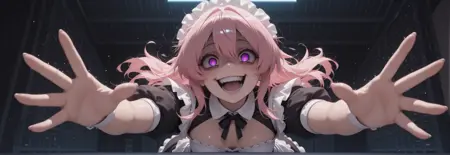

695
2.2K
3.7K


License:
Illustrious License
This LoRA allows you to create anthropomorphic chipmunks in any style – anime, furry, realistic. It also allows you to create animal chipmunks.
Models based on Illustrious are unable to draw an anthropomorphic chipmunks due to the lack of a sufficient number of consistently drawn anthropomorphic chipmunks in their datasets.
Model is mostly trained on images generated by Nano Banana 2, supplemented with realistic images from ChatGPT Images 2. I spent about four months creating a homogeneous dataset.
Activation tags:
chipmunk girl, chipmunk ears, chipmunk tailor
chipmunk boy, chipmunk ears, chipmunk tail"chipmunk ears, chipmunk tail" part is optional.
For anthro, add "furry female" or "furry male" to the prompt. I also recommend using a special checkpoint, like Nova Furry XL.
Recommended LoRA weight is 0.8.
If the model draws a furry when a human with chipmunk ears and tail is requested, add "human" somewhere at the beginning of the prompt and "furry" to the negatives.
Important information:
As it turns out, parallel lines are too complex a concept for SDXL 😁, so minor generation errors may occasionally be observed, such as:
Unexplained stripes on the hips and, occasionally, on the sides in a three-quarter view. In this case, add "striped fur" to the negatives. The same applies to unwanted chipmunk stripes on the back of humans with ears and a tail.
Too long tail in the full body view. Add "long tail" to the negatives to avoid this.
An arbitrary number of stripes on the forehead. There should be three of them.
Irregular chipmunk stripes on the back and back of the head.
I don't know where all this came from, there's nothing like it in the dataset. I think LoRA activates certain neurons from other species. For example, gazelles have stripes on their sides.
Other useful tags:
bald girl, bald (without "boy") – tells the model not to draw hair. In fact, furries aren't bald 😅
<color> fur – like "blue fur", "red fur", and even "black fur". Also applicable to coloring ears and tails of humans.
<color> claws – like "brown claws", "white claws", etc.
plantigrade, digitigrade – not very stable due to the lack of support in the base models, but improves the percentage of good images. By the way, chipmunks are plantigrade.
5 toes, 4 toes – sets the number of toes. Similarly, it works inconsistently, but improves the situation.
pawpads, heel pad – "pawpads" adds pads on the hands and feet. And "heel pad" also adds pads to the heels (if you're lucky).
countershade arms, countershade butt – adds/removes areas of light fur on the arms and, actually, on the butt. I didn't tag other countershading tags to keep the results consistent, but they might work, especially with high weights.
buck teeth – makes teeth the way they should be in rodents.